
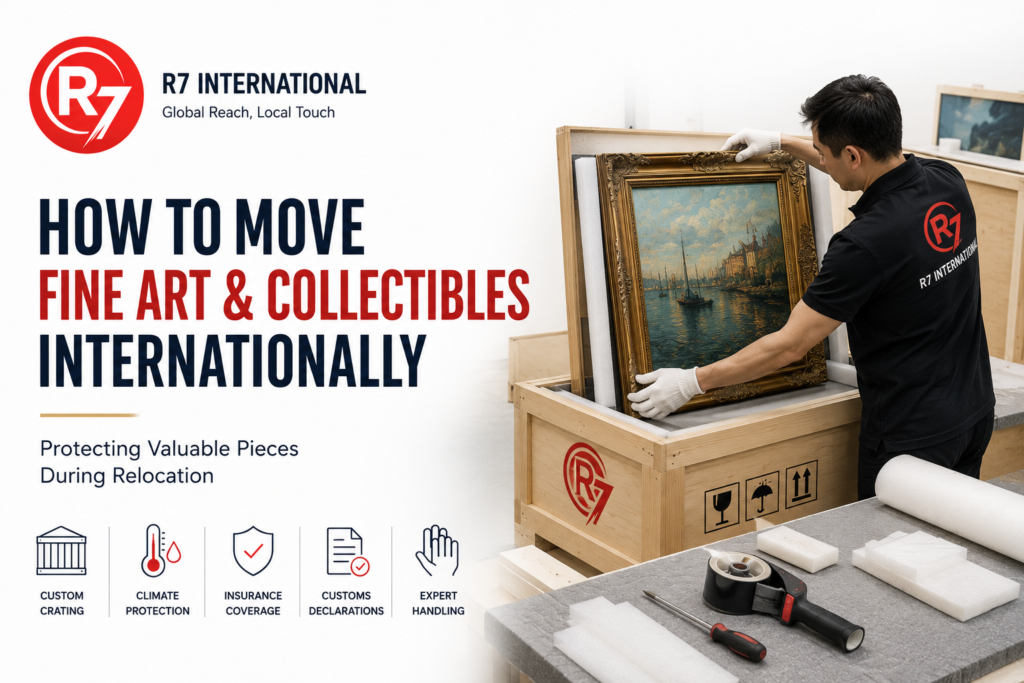
Learn how to protect fine art during international fine art moving with expert packing, insurance and customs advice.
Relocating artwork, antiques, sculptures, and valuable collectibles requires far more than standard packing and shipping procedures. Fine art moving demands specialised handling, custom crating, climate protection, insurance planning, and careful customs management to ensure valuable pieces arrive safely at their destination.
Whether you are a private collector, corporate office, embassy, gallery, or museum, understanding the principles of artwork relocation can significantly reduce the risk of damage during transit.
In this guide, we explain the key considerations for international art shipping and how professional fine art logistics providers protect high-value items throughout the relocation process.
Why Fine Art Moving Requires Specialist Expertise
Unlike standard household goods, fine art pieces are often irreplaceable.
Potential risks include:
- Physical damage
- Temperature fluctuations
- Humidity exposure
- Vibration during transport
- Customs delays
- Improper handling
- Insurance complications
Even minor impacts can result in significant restoration costs or permanent loss of value.
This is why professional fine art moving services use dedicated procedures designed specifically for valuable and fragile items.
Understanding Different Types of Fine Art and Collectibles
Every item requires its own protection strategy.
Common categories include:
Paintings
Oil paintings, acrylic works, water colours and mixed media pieces often require custom protection against pressure, vibration and environmental changes.
Sculptures
Sculptures can present unique challenges due to irregular shapes, weight distribution and fragile components.
Antiques
Antique furniture, clocks and decorative pieces often contain delicate materials that require specialized packing methods.
Collectibles
High-value collectibles such as rare books, coins, stamps, watches and memorabilia require secure handling and detailed inventory management.
Museum and Exhibition Pieces
Museum-grade objects often require conservation-level protection throughout transportation and storage.
The Importance of Custom Crating
One of the most critical aspects of fine art moving is the use of custom-built crates.
Professional art crates are designed specifically for each piece and provide protection against:
- Shock
- Vibration
- Compression
- Accidental impact
- Environmental exposure
Features of Professional Art Crates
Custom crates may include:
- Foam cushioning systems
- Shock absorption materials
- Moisture barriers
- Internal bracing
- Security seals
A properly engineered crate significantly reduces risk throughout the artwork relocation process.
Climate Considerations During International Fine Art Moving
Environmental conditions can have a major impact on artwork and collectibles.
Temperature Changes
Extreme heat or cold can damage:
- Paint surfaces
- Canvas tension
- Wood frames
- Antique finishes
Humidity Fluctuations
Excess moisture can lead to:
- Mould growth
- Warping
- Corrosion
- Material degradation
Climate-Controlled Transport
For high-value shipments, climate-controlled vehicles and storage facilities help maintain stable conditions throughout transit.
This is especially important when moving artwork between tropical regions such as Malaysia, Singapore, Thailand, Vietnam and Indonesia.
Insurance for Fine Art Moving
Standard moving insurance is often insufficient for valuable artwork and collectibles.
Before arranging international art shipping, owners should review:
Declared Values
Ensure accurate valuations are available for every item.
Specialist Fine Art Insurance
Dedicated fine art policies may provide broader protection than general transit insurance.
Condition Reporting
Professional condition reports help establish an item’s state before transportation begins.
Appraisals
Updated appraisals may be required for insurance purposes and customs declarations.
Insurance should always be considered an essential component of any artwork relocation project.
Customs Declarations and International fine Art moving
Customs requirements vary significantly from country to country.
Proper documentation helps avoid delays and unnecessary inspections.
Common Customs Documents
Typical requirements include:
- Commercial invoices
- Valuation certificates
- Packing inventories
- Export permits
- Import permits (where applicable)
- Proof of ownership
Cultural Heritage Restrictions
Certain countries restrict the export or import of cultural artefacts, antiques and historically significant items.
Always verify local regulations before shipping.
Temporary Import Procedures
Museums and galleries frequently use temporary import arrangements for exhibitions and events.
Special customs procedures may apply.
Professional Handling Procedures
Safe handling is just as important as proper packing.
White-Glove Handling
Professional fine art moving teams use trained personnel experienced in handling valuable items.
Protective Equipment
Handlers may use:
- Cotton gloves
- Protective blankets
- Lift systems
- Art carts
- Custom supports
Chain of Custody Documentation
Many artwork relocation projects include detailed tracking and handling records to maintain accountability throughout the move.
Fine Art Moving Checklist
Before arranging international art shipping, ensure you have:
✓ Professional condition reports
✓ Updated valuations
✓ Appropriate insurance coverage
✓ Custom crating arrangements
✓ Climate-control requirements assessed
✓ Customs documentation prepared
✓ Destination delivery access confirmed
✓ Specialist fine art movers engaged
✓ Inventory records completed
✓ Photographic documentation of all items
Common Mistakes to Avoid
Using Standard Household Packing Materials
Artwork requires specialist packing systems designed for valuable and fragile objects.
Underinsuring Valuable Pieces
Replacement costs and restoration expenses can be substantial.
Ignoring Climate Risks
Environmental conditions are one of the leading causes of artwork damage during transit.
Incomplete Customs Documentation
Missing paperwork can result in delays, inspections, and additional storage costs.
Using Non-Specialist Movers
General moving procedures may not provide adequate protection for fine art and collectibles.
How R7 International Supports Fine Art Moving
At R7 International, we understand that fine art moving requires a specialised approach.
Our services include:
- Custom crating solutions
- International art shipping coordination
- Climate-controlled transportation
- Customs documentation support
- White-glove handling
- Secure storage options
- Regional logistics support across ASEAN
We work with private collectors, corporate offices, galleries, museums and institutions requiring professional artwork relocation services throughout Southeast Asia and beyond.
Final Thoughts
Successful fine art moving requires careful planning, specialist expertise, and attention to every stage of the relocation process.
From custom crating and climate-controlled transport to insurance and customs management, each step plays a critical role in protecting valuable artwork and collectibles.
Whether you are relocating a single painting or managing an entire collection, working with experienced professionals helps ensure your pieces arrive safely and in the same condition they left.
For assistance with fine art moving, artwork relocation, or international art shipping across ASEAN and beyond, contact R7 International at info@r7intl.com.