
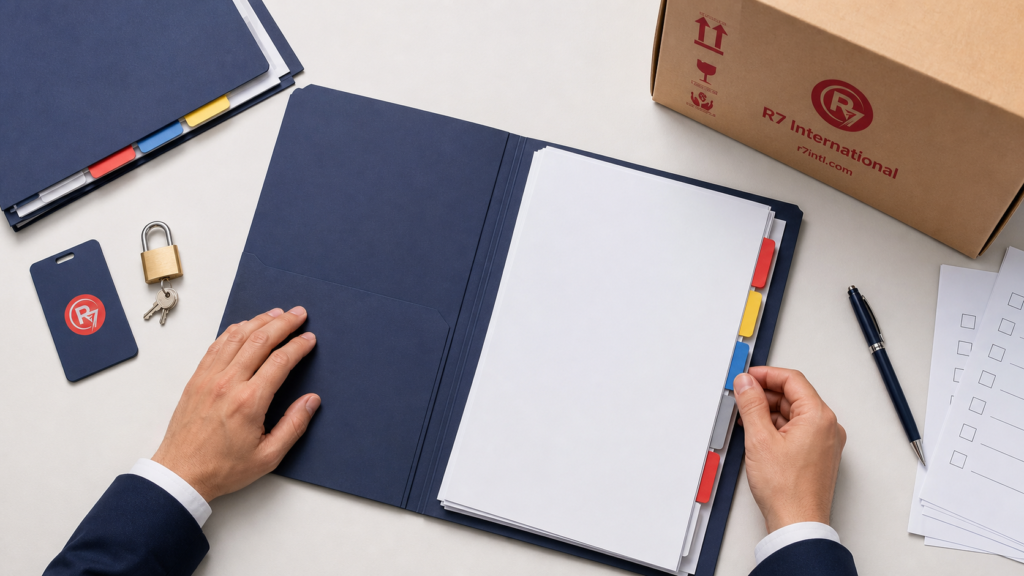
Office relocations are usually planned around people, equipment and the new workplace. Documents are just as important, but they can be easy to overlook until someone needs an original contract, an employee record or a customs document and cannot find it.
A corporate move may involve paper files, laptops, servers, archived records, immigration documents, financial information and sensitive client material. Moving those items safely is not only a packing exercise. It is a question of access, accountability and continuity.
This guide sets out a practical way to prepare important documents before, during and after a corporate relocation.
Start by deciding which documents matter most
Do not begin with a box count. Begin with the decisions your business must still be able to make while the office is being moved. Which documents are needed for payroll, immigration, contracts, customer service, finance, compliance or day-to-day operations?
Create a short list of critical records, then separate it from material that can move later or be securely archived. This makes the move more manageable and reduces the chance that essential files disappear into a general carton of office contents.
Common priority groups include:
- company registration, banking and legal documents;
- employee contracts, payroll and immigration records;
- customer, supplier and insurance information;
- active project and commercial files;
- asset registers, equipment records and warranties;
- customs inventories, shipping paperwork and delivery records.
Separate originals from working copies
Some documents are difficult or impossible to replace. Identify the originals that should stay with a responsible person rather than travelling in a general office shipment. This may include passports, signed agreements, certificates, deeds, licences, company seals or records needed for a regulatory submission.
Make secure working copies for the people who need them, but avoid creating uncontrolled duplicates. A simple register showing who holds each original and where it will be delivered can prevent a lot of confusion during a busy move.
If a document is needed for an employee’s move, keep it with the employee or the authorised mobility team whenever possible. The wider international relocation timeline can help teams identify when immigration, housing and shipment paperwork will be needed.
Build a document register
A document register does not need to be complicated. It can be a protected spreadsheet or a controlled list with a reference number, document type, owner, sensitivity, destination and status.
For physical files, note the carton or sealed case number. For digital records, note the system or folder where the authorised copy is stored. Avoid putting confidential content into the register itself; the register should help locate a document without becoming a second copy of the sensitive information.
Useful status labels might include “with employee”, “packed”, “in transit”, “received”, “scanned” or “securely destroyed”. Use terminology your team understands and agree who is responsible for updating it.
Protect confidential information during packing
Confidential documents should not be left unattended in open trays or on desks while the office is being packed. Clear surfaces in stages and use sealed, labelled cartons or lockable containers for sensitive material.
Labels should help the authorised team identify the contents without advertising the information to everyone handling the move. A coded reference is often more appropriate than writing “salary records” or “client contracts” on the outside of a box.
Keep a chain-of-custody record for highly sensitive files. Note when a sealed container is handed over, who accepted it and when it reached the destination. This is especially useful when a move crosses borders or involves several local partners.
Use secure digital copies carefully
Scanning key documents before a move can provide continuity if a physical file is delayed or damaged. Store the copies in an approved business system with access controls, multi-factor authentication and a clear backup routine.
Avoid sending confidential files through personal email accounts or leaving them on unencrypted USB drives. Check that staff can access the required systems from the new location before the old office is closed. If access depends on a local network, VPN or device configuration, test it as part of the move plan.
Digital copies do not remove the need to protect originals. They simply give authorised people a reliable reference while the physical records are being transferred.
Plan documents alongside IT equipment
Documents and technology are often connected. A finance file may depend on a server, a scanner, a filing application or a particular user permission. Moving the paper without the system—or the system without the paper—can interrupt work.
For office moves, coordinate document priorities with the IT plan. R7’s office IT and server relocation guidance covers the importance of access planning, equipment records and specialist handling. Make sure critical systems are backed up and that there is a clear recovery contact if something cannot be accessed on the first day.
Consider cross-border and customs requirements
When documents are transported internationally, the moving team needs accurate descriptions and clear instructions. Some records may need to stay with the business traveller or move through a secure document courier rather than being packed with household goods or general office effects.
Ask early whether the planned shipment includes original documents, company equipment, samples or records that may require special treatment. Keep copies of the inventory and transport documents with the authorised project team. If customs asks for clarification, a clear register makes it easier to respond without opening every box.
Our customs clearance guide explains why accurate descriptions and organised paperwork can make an international movement smoother.
Assign ownership before moving day
Document security becomes unclear when everyone assumes someone else is responsible. Name an owner for each document group and give them a practical handover plan.
The owner should know what is moving, what stays behind, who can access it, how it will be checked at destination and what happens if something is missing. For employee records, coordinate with HR or the authorised mobility provider. For client and legal records, include the relevant department rather than leaving the decision with the packing team.
It is also worth agreeing an escalation route. If a sealed case arrives damaged, a file is missing or a system cannot be accessed, people should know who to call immediately.
Check the new office before the records arrive
Do not send sensitive files to a new location without confirming that there is somewhere secure to receive them. Check the access arrangements, lockable storage, alarm procedures, reception process and named recipient.
If the new office is not ready, use an approved secure storage arrangement and record the transfer. A temporary gap in accommodation should not turn into an uncontrolled gap in document custody.
A practical corporate document checklist
- Identify critical documents and their owners.
- Separate originals, working copies, archives and items for secure disposal.
- Create a register using coded references rather than sensitive descriptions.
- Scan priority documents into an approved, backed-up business system.
- Pack confidential files in sealed or lockable containers.
- Record handovers for sensitive or cross-border shipments.
- Coordinate document access with the IT and office move plans.
- Confirm the destination recipient and secure storage before delivery.
- Reconcile the register after arrival and report any gaps promptly.
How R7 can help
R7 International helps businesses coordinate the practical side of international office and employee relocations, including planning, packing, transport, customs coordination and delivery. We work with the project team to understand which items need special handling and how the move should be organised around business continuity.
If you are preparing a corporate relocation and want to discuss document handling alongside the wider move, contact R7 International. Early planning gives your team more control over what moves, who can access it and when the business is ready to operate again.
Document retention, privacy and cross-border handling requirements vary by organisation and country. Follow your internal policies and obtain professional advice where the records are subject to specific legal or regulatory obligations.