
What Can and Cannot Be Shipped Internationally? A Practical Guide for International Moves
One of the most common questions people ask before relocating overseas is:
“What are the prohibited moving items?”
While most household goods can be transported without issue, many countries maintain strict regulations on prohibited moving items and customs restricted goods. Shipping restricted items can result in delays, inspections, fines, confiscation, or even the rejection of an entire shipment.
Whether you are relocating for work, moving with your family, or returning home after an international assignment, understanding these restrictions is essential for a smooth relocation experience.
This guide explains common prohibited moving items, country-specific considerations, and practical steps to avoid customs issues during your international move.
Why Customs Restrictions Exist
Every country regulates imports to protect:
- Public health
- National security
- Agriculture and food supplies
- Local wildlife and ecosystems
- Cultural and historical heritage
- Consumer safety
As a result, customs authorities carefully review household goods shipments entering their borders.
Even if an item is legal in your home country, it may be prohibited or restricted at your destination.
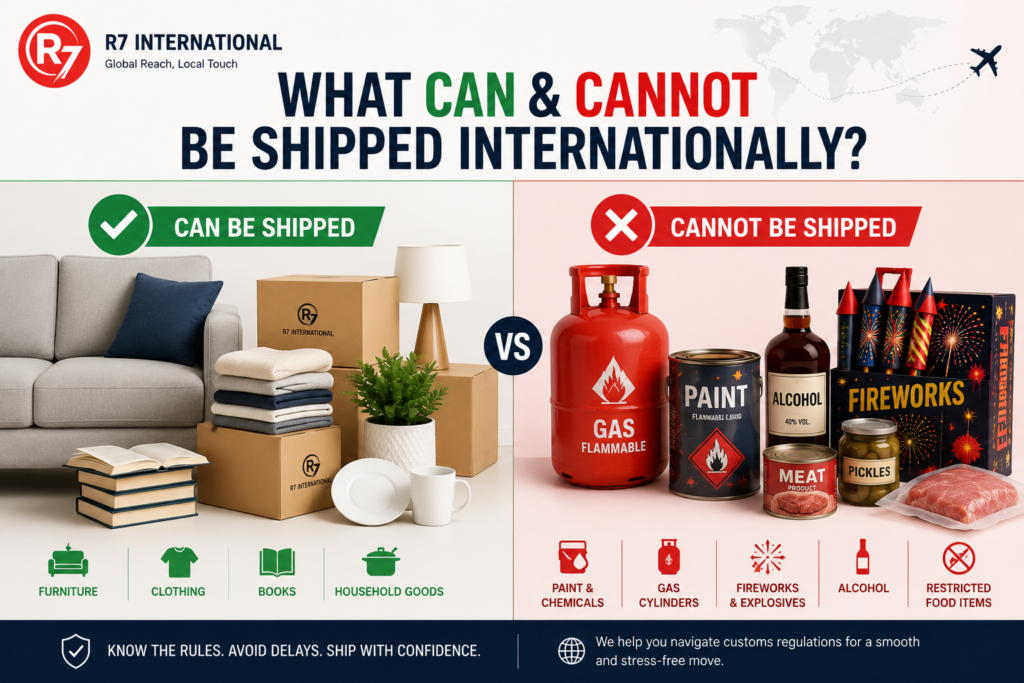
Common Household Goods That Can Usually Be Shipped
Most international household goods shipments include:
- Furniture
- Clothing
- Books
- Household appliances
- Kitchenware
- Personal effects
- Children’s toys
- Home décor
- Office equipment
However, these items must generally be properly declared and documented.
Common Prohibited Moving Items
The following prohibited moving items are commonly restricted by customs authorities worldwide.
Hazardous Materials
Most international movers cannot transport:
- Gas cylinders
- Fire extinguishers
- Propane tanks
- Explosives
- Fireworks
- Ammunition
These items pose transportation safety risks and are generally prohibited.
Flammable Liquids
Examples include:
- Paint thinner
- Petrol
- Kerosene
- Fuel additives
- Certain cleaning chemicals
These products are typically prohibited by both sea freight and air freight regulations.
Corrosive Chemicals
Customs authorities often prohibit:
- Industrial cleaning agents
- Strong acids
- Chemical solvents
- Certain pesticides
These materials require specialized handling and permits.
Illegal Substances
Controlled substances are strictly prohibited and may result in severe legal penalties.
Examples include:
- Illegal drugs
- Narcotics
- Unauthorized pharmaceuticals
Always check destination country regulations before shipping medication.
Common Customs Restricted Goods
Unlike prohibited moving items, restricted goods may be shipped under specific conditions.
Alcohol
Many countries impose:
- Import duties
- Quantity limits
- Licensing requirements
Rules vary significantly between countries.
Tobacco Products
Restrictions often apply to:
- Cigarettes
- Cigars
- Vape products
- Tobacco products
Duty payments may be required.
Food Products
Food items frequently trigger customs inspections.
Commonly restricted items include:
- Fresh fruit
- Vegetables
- Meat products
- Dairy products
- Seeds
- Plant materials
Agricultural restrictions are particularly strict in many countries.
Medicines and Prescription Drugs
Some prescription medications are permitted, while others require:
- Medical documentation
- Import permits
- Prescription verification
Travellers should always consult local regulations before shipping medicines internationally.
Firearms and Weapons
Many countries impose strict controls on:
- Firearms
- Ammunition
- Replica weapons
- Hunting equipment
Import permits are usually required, and some countries prohibit these items entirely.
Country-Specific Considerations in ASEAN
Malaysia
Malaysia generally restricts:
- Firearms
- Controlled medicines
- Certain food products
- Plant materials
- Wireless communication equipment requiring approval
Singapore
Singapore maintains strict controls on:
- Tobacco products
- Alcohol
- Chewing gum
- Controlled medicines
- Weapons and weapon replicas
Documentation requirements are closely enforced.
Thailand
Thailand commonly restricts:
- Buddha images intended for export
- Certain medicines
- Agricultural products
- Firearms
Additional permits may be required.
Vietnam
Vietnam may impose restrictions on:
- Cultural artefacts
- Publications
- Certain electronics
- Medical products
- Telecommunications equipment
Indonesia
Indonesia often restricts:
- Food products
- Alcohol
- Pharmaceuticals
- Certain electronics
- Plant and animal products
Customs inspections may be more extensive depending on shipment contents.
How to Avoid Customs Delays
Many international shipment delays occur because restricted items were packed unknowingly.
Before packing:
Conduct a Detailed Inventory
Prepare a complete packing list before your move.
Check Destination Country Regulations
Requirements vary significantly between countries.
Declare Everything Accurately
Incorrect declarations often result in inspections and delays.
Avoid Last-Minute Packing
Items added at the last minute are frequently overlooked during inventory preparation.
Work with Experienced International Movers
Professional movers can identify customs restricted goods before shipment.
International Moving Checklist
Before your shipment leaves:
✓ Prepare a complete inventory
✓ Remove prohibited moving items
✓ Check destination regulations
✓ Verify medication requirements
✓ Declare high-value items
✓ Confirm customs documentation
✓ Review insurance coverage
✓ Consult your relocation provider
Frequently Asked Questions
Can I ship food internationally?
Some packaged foods may be permitted, but fresh food, meat, dairy products, and agricultural products are often restricted.
Can I ship alcohol?
Many countries allow alcohol imports, but duties, quantity limits, and permits may apply.
Can I ship prescription medication?
Possibly. However, documentation and prescriptions are often required.
Can customs open my shipment?
Yes. Customs authorities have the right to inspect household goods shipments.
What happens if prohibited items are found?
Customs may confiscate the items, impose fines, delay the shipment, or reject entry altogether.
Final Thoughts
Understanding prohibited moving items and customs restricted goods is one of the most important steps in planning an international move. What may seem like an ordinary household item can sometimes trigger customs inspections, delays, or additional costs if not properly declared.
By checking destination-country regulations, preparing accurate documentation, and working with experienced relocation professionals, you can avoid unnecessary complications and ensure a smoother relocation experience.
R7 International supports international relocations across Malaysia, Singapore, Thailand, Vietnam, and Indonesia, helping individuals, families, and corporate clients navigate customs requirements and international shipping regulations with confidence.
For assistance with international moving, customs clearance, and relocation planning, contact R7 International at info@r7intl.com.