
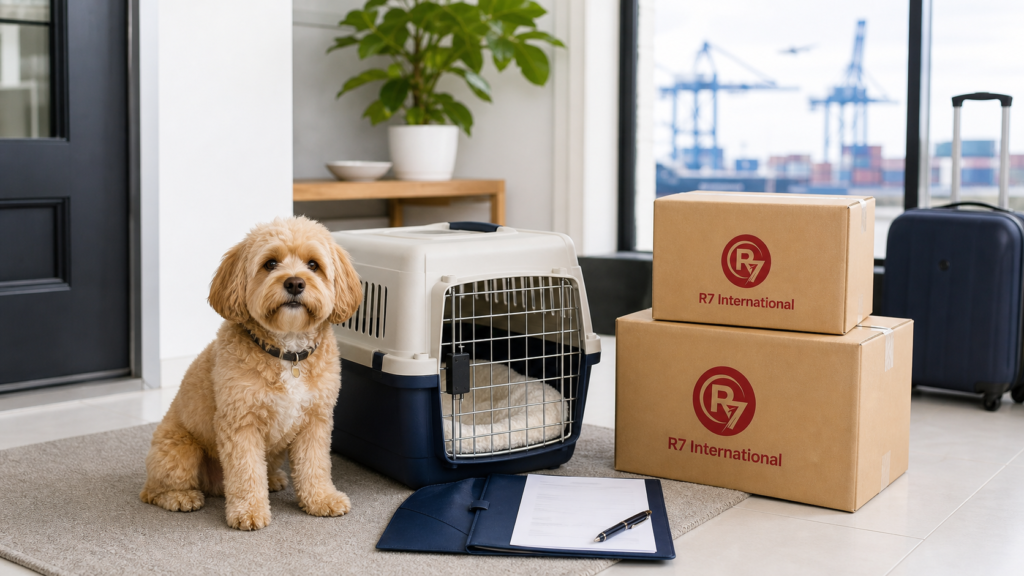
Moving to another country is a big change for any household. When a pet is part of the move, there is another family member to plan for, with their own health, travel and settling-in needs.
Pet relocation from Southeast Asia can be managed successfully, but it should not be left until the last few weeks. Import rules, veterinary documents, airline requirements and quarantine arrangements can all vary by destination. Starting early gives you time to deal with the details without making the journey feel rushed.
This guide covers the main planning points for moving a dog or cat from Southeast Asia. It is intended as a practical starting point; the final requirements should always be confirmed with the destination authority, airline and your veterinarian.
Start with the destination requirements
The first step is to understand what the destination country requires before your pet travels. Depending on the route, this may include a microchip, vaccinations, a veterinary health certificate, blood tests, an import permit, parasite treatment and quarantine or inspection arrangements.
Requirements can change, and two countries in the region may ask for very different documents. Even when the pet has travelled before, do not assume the previous paperwork will be accepted on the next route.
Ask for the current requirements in writing and note any deadlines. Some documents are valid only for a limited period, while certain vaccinations or blood tests need to be completed weeks or months before arrival.
Build a pet relocation timeline
Once you know the destination requirements, work backwards from the intended arrival date. A simple timeline should include:
- checking the destination rules and airline conditions;
- confirming your pet’s microchip and vaccination records;
- booking a consultation with a veterinarian familiar with international travel;
- arranging any blood tests, permits or government endorsements;
- selecting an airline-approved travel crate;
- booking the flight and checking transfer arrangements; and
- preparing the arrival address, transport and settling-in plan.
Allow extra time for public holidays, appointment availability and corrections to documents. A small error in a name, microchip number or date can create an avoidable delay.
Our international relocation timeline explains how pet planning can fit alongside the wider household move.
Speak to your veterinarian early
Your veterinarian can confirm whether your pet is fit to travel and advise on the vaccinations, treatments and certificates required for the route. This is also a good opportunity to discuss your pet’s temperament, age, medical history and how they are likely to cope with a long journey.
Keep copies of vaccination records, test results, prescriptions and any other relevant documents. If your pet takes regular medication, ask how much you should carry and whether the medication is permitted in the destination country.
Sedation should never be planned casually. Airlines and veterinarians may have specific policies, and medication can affect an animal’s ability to cope with changes in pressure, temperature and handling. Follow professional advice rather than relying on general online recommendations.
Choose the right travel crate
A suitable crate should be large enough for your pet to stand, turn around and lie down naturally. It should be secure, well ventilated and compliant with the airline’s current requirements.
Introduce the crate well before the move. Leave it open at home with familiar bedding inside, then gradually encourage your pet to spend short, calm periods in it. The goal is for the crate to feel familiar rather than appearing for the first time on travel day.
Do not overfill the crate. A familiar-smelling item may help, but loose toys, bowls or bedding should not create a safety risk. Check the airline’s instructions for water containers, absorbent material and labelling.
Plan the flight and route carefully
The shortest route is not always the simplest route for a pet. Look at the number of connections, airport handling arrangements, climate conditions and the time between flights. A route with fewer transfers may reduce handling, while a suitable connection may be preferable to a very long wait.
Check whether the airline accepts pets on the intended aircraft and route. Some carriers have seasonal restrictions, temperature limits or separate rules for cabin, checked or cargo travel. Confirm the arrangements again shortly before departure, because airline procedures can change.
For a corporate relocation, include the pet’s travel plan in the wider move schedule. The household may need to travel on a different date from the shipment, and temporary accommodation may need to accept pets.
Prepare for departure day
Keep the final day as calm and predictable as possible. Feed your pet according to your veterinarian’s and airline’s guidance, allow time for exercise, and arrive with every document organised and easy to access.
Carry a document pack containing copies of the owner’s identification, vaccination records, permits, health certificates, flight details, destination address and emergency contacts. Keep digital copies as a backup, but do not rely only on a phone if airport staff need to inspect the originals.
Use secure identification details on the crate and make sure the contact information is current. A simple card with the destination address, local contact number and basic feeding instructions can help if a handler needs clarification.
Think about the first few days after arrival
Arrival is not the end of the plan. Arrange transport from the airport, check whether an inspection or quarantine appointment is required, and confirm where your pet will rest on the first night.
Bring familiar food if it is permitted, along with a blanket or item carrying a familiar scent. Keep the first few days quiet and allow your pet time to adjust to different temperatures, smells, sounds and routines.
If the new home is not ready, check temporary accommodation and storage arrangements in advance. Our Southeast Asia relocation guide can help place the pet move within the wider family relocation plan.
Common mistakes to avoid
- Starting too late: some tests, permits and vaccinations have lead times that cannot be shortened.
- Relying on old information: always confirm the current rules for the exact destination and route.
- Leaving crate training until the last minute: familiarity can make the travel experience less stressful.
- Booking the flight before checking the pet requirements: the best passenger itinerary may not be suitable for the animal.
- Keeping documents in different places: use one organised document pack and keep backups.
- Forgetting the arrival plan: transport, inspection, accommodation and food should be arranged before departure.
How R7 can support the wider move
Pet travel has to work alongside the household shipment, visas, temporary accommodation and the employee’s start date. R7 can help coordinate the moving plan and keep the different stages visible, so the family is not trying to manage every detail at the airport or on collection day.
We can also help you identify the questions that should be raised early with your veterinarian, airline and destination partners. For advice about planning your wider relocation, contact R7 International to discuss your move.
Final checklist
- Destination import requirements confirmed
- Microchip and vaccination records checked
- Veterinary appointment and certificates arranged
- Airline, crate and route requirements confirmed
- Travel and document copies prepared
- Airport transfer and arrival arrangements organised
- Pet-friendly accommodation confirmed if needed
With an early start and a clear plan, moving with a pet from Southeast Asia can be much more manageable. The details matter, but so does giving yourself enough time to make sensible decisions for your pet and your family.