
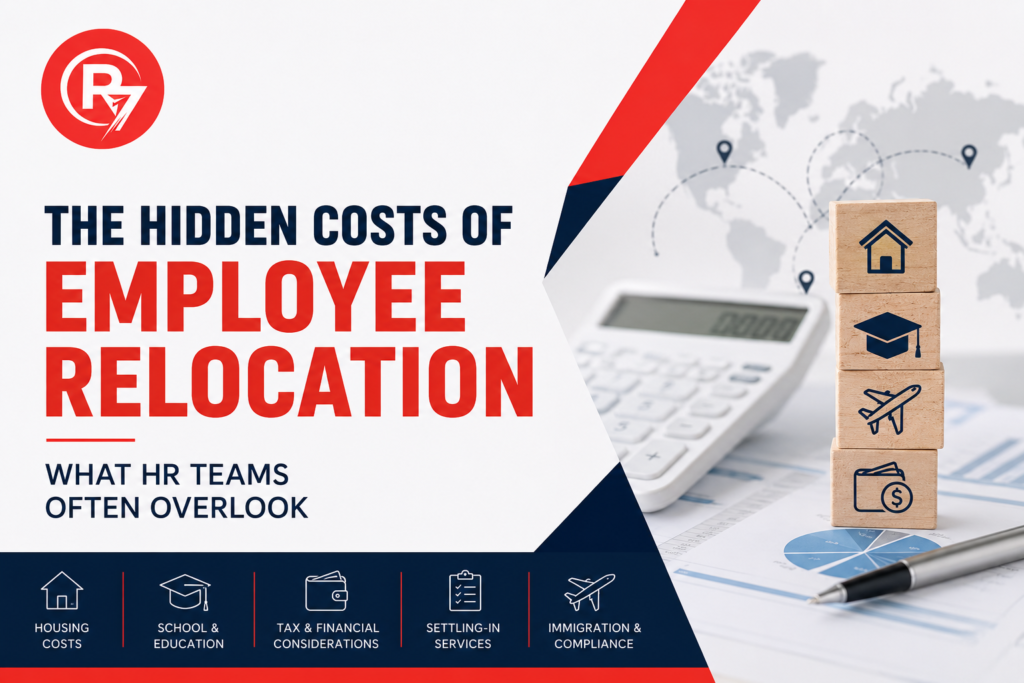
Discover the hidden employee relocation costs HR teams often overlook, from housing and schooling to taxes, immigration, and compliance.
When organizations plan an employee relocation costs, budgets are often built around the most visible expenses: flights, visa applications, and household goods shipments.
However, experienced HR and global mobility teams understand that the true cost of relocation extends far beyond transportation and immigration paperwork.
Unexpected expenses can quickly impact budgets, employee satisfaction, and assignment success if they are not identified and planned for early in the relocation process.
Whether relocating an employee from Singapore to Malaysia, transferring talent across ASEAN, or managing a long-term international assignment, understanding the hidden costs of employee relocation is essential for effective workforce planning.
Why Relocation Budgets Often Fall Short
Many relocation policies focus on the direct costs associated with moving an employee from one location to another.
Typical budget items include:
- Flights
- Immigration and visa fees
- Household goods shipping
- Temporary accommodation
- Relocation allowances
While these expenses are important, they often represent only part of the overall relocation investment.
The reality is that employee relocation involves a wide range of logistical, administrative, and lifestyle-related costs that can significantly impact both employers and assignees.
Temporary Accommodation Costs
One of the most commonly underestimated relocation expenses is temporary accommodation.
Many employees arrive in a new country before securing permanent housing, creating a need for short-term accommodation such as:
- Serviced apartments
- Corporate housing
- Hotels
- Temporary rental units
Depending on the destination city, temporary accommodation costs can quickly exceed initial expectations.
In high-demand markets such as Singapore, Kuala Lumpur, Bangkok, or Jakarta, employees may require temporary housing for several weeks or even months while completing home searches and lease negotiations.
Home Search and Lease Setup Expenses
Securing suitable accommodation is often more complex than anticipated.
Additional costs may include:
- Property search assistance
- Real estate agency fees
- Security deposits
- Utility deposits
- Furniture rental
- Initial household setup costs
For relocating families, housing decisions are often influenced by factors such as school proximity, commuting times, and access to amenities, which can further impact budgets.
School Search and Education Costs
For employees relocating with children, education is frequently one of the largest hidden relocation expenses.
International school fees across ASEAN can vary significantly and may include:
- Registration fees
- Application fees
- Capital development fees
- Annual tuition fees
- Transportation costs
- Uniforms and learning materials
Failure to account for these expenses can place unexpected financial pressure on both employers and relocating families.
Destination and Settling-In Services
Relocating employees often require support beyond transportation and housing.
Destination services help assignees adapt to their new environment and may include:
- Area orientation
- Banking assistance
- Utility setup
- Mobile phone registration
- Local transportation guidance
- Government registration support
While these services represent an additional cost, they can significantly improve employee experience and reduce assignment stress.
Immigration and Compliance-Related Costs
Visa fees are usually included in relocation budgets, but related compliance costs are often overlooked.
These may include:
- Document legalization
- Translation services
- Medical examinations
- Dependant applications
- Employment Pass renewals
- Local registrations and reporting requirements
As immigration policies continue to evolve across ASEAN markets, compliance costs can become a larger component of relocation programs.
Tax and Financial Considerations
Tax implications are among the most complex and frequently underestimated aspects of employee relocation.
Potential costs may include:
- Tax equalization programs
- Tax advisory services
- Payroll adjustments
- Social security obligations
- Dual-country tax considerations
Organizations should work closely with tax specialists when planning international assignments to avoid unexpected liabilities.
Household Goods Shipment Variations
Shipping costs themselves can also fluctuate due to factors that are not always considered during initial budgeting.
Variables include:
- Shipment volume
- Freight market conditions, especially during times of war.
- Customs duties and taxes
- Storage requirements
- Access challenges at origin or destination
- Additional handling requirements
Unexpected customs inspections or documentation issues can also create delays and additional charges.
Family Adjustment and Assignment Success
Successful relocations depend on more than logistics.
Research consistently shows that family adjustment plays a significant role in assignment success.
Challenges such as:
- Housing dissatisfaction
- School placement difficulties
- Cultural adjustment
- Spouse employment concerns
can contribute to assignment failure and early repatriation.
The cost of replacing a failed international assignment can be substantially higher than the cost of investing in proper relocation support from the beginning.
Building a More Accurate Relocation Budget
To reduce surprises and improve relocation outcomes, HR and mobility teams should consider budgeting for:
✓ Immigration support
✓ Household goods transportation
✓ Temporary accommodation
✓ Home search assistance
✓ School search support
✓ Destination services
✓ Tax advisory services
✓ Compliance-related expenses
✓ Storage and contingency costs
✓ Family support requirements
A comprehensive relocation budget provides greater cost visibility and helps ensure a smoother experience for employees and their families.
Frequently Asked Questions About Employee Relocation Costs:
What are the biggest employee relocation costs?
Employee relocation costs typically include immigration fees, household goods shipping, temporary accommodation, destination services, and family support expenses.
How much should companies budget for employee relocation?
The total cost varies depending on destination, family size, shipment volume, and assignment duration. Many organizations underestimate indirect costs such as temporary housing and tax support.
Why do international relocations exceed budget?
Unexpected expenses such as customs delays, school fees, lease deposits, and immigration compliance requirements often increase relocation costs.
Final Thoughts
Employee relocation costs extend far beyond flights, visas, and moving services.
Organizations that understand the full scope of relocation expenses are better positioned to support employees, manage budgets effectively, and improve assignment success rates.
As global mobility programs continue to evolve, taking a proactive approach to relocation planning can help employers avoid unexpected costs while delivering a positive experience for relocating talent.
How R7 International Can Help
R7 International supports organizations across Malaysia, Singapore, Thailand, Vietnam, and Indonesia with corporate relocation, destination services, immigration coordination, and global mobility solutions.
Whether you are relocating a single employee or managing a regional mobility program, our team can help you plan and execute relocations with confidence.
Contact us at info@r7intl.com to learn more about our corporate relocation and mobility services.