
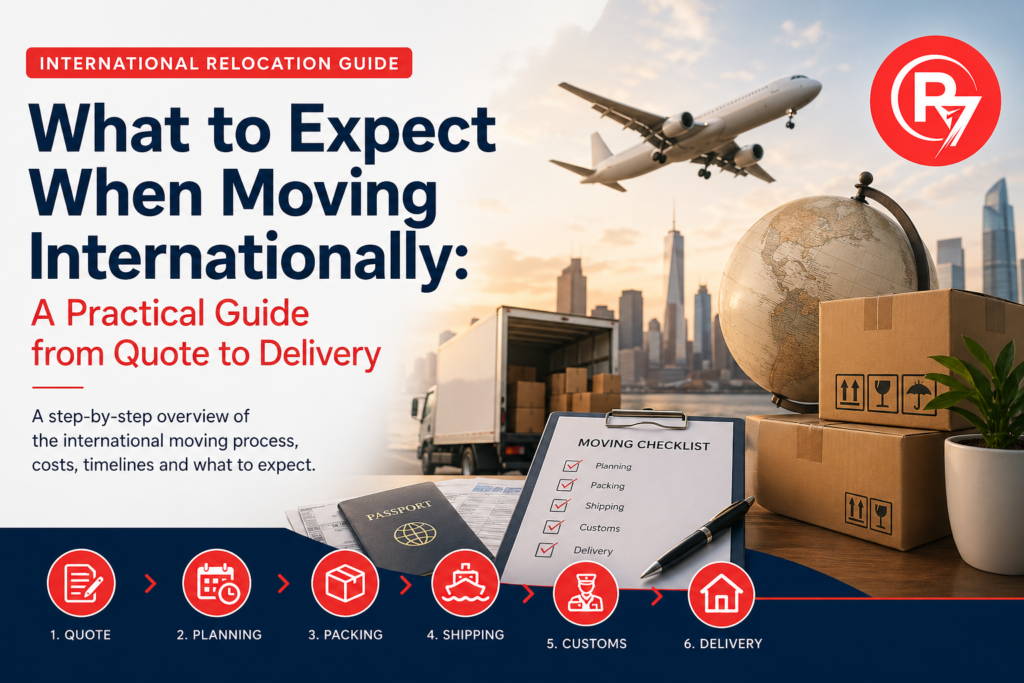
Introduction
One of the most common questions I get from clients is:
“What actually happens once we decide to move?”
For many people, international relocation is not something they do often. It’s unfamiliar, and understandably, there are concerns around pricing, timelines, documentation, and unexpected costs.
In this guide, I want to walk you through the process based on what we see day-to-day at R7 International. This is not a theoretical checklist—it’s how moves actually happen in the real world.
It Starts with the Quotation (And Why This Step Matters More Than You Think)
Every move begins with a survey.
This can be done physically or via video, but the goal is always the same: to understand exactly what you are moving.
Your quotation is based on:
- Volume of your shipment
- Packing requirements
- Destination and access
- Current market conditions
This is also where many misunderstandings happen.
Two quotes can look very different—not because one company is cheaper, but because they are pricing differently.
If you’re comparing options, I strongly recommend understanding how to choose an international moving company before making a decision.
Once You Confirm, Planning Begins Immediately
After confirmation, we move into scheduling and coordination.
At this stage:
- Packing dates are locked in
- Shipping method is confirmed
- Documentation requirements are shared
This is also where timelines start to take shape.
However, it’s important to understand that timelines are influenced by external factors—especially in today’s environment. If your move falls during busy periods, planning becomes even more critical. You can read more about this in our peak season moving guide.
Preparation Is Where Smooth Moves Are Made
Before packing even starts, there’s a lot happening behind the scenes.
We work with clients to:
- Prepare documentation
- Confirm access at both origin and destination
- Finalize packing lists
This stage is often underestimated, but it plays a major role in avoiding delays later on.
Packing Day: What Clients Don’t Always Realize
Packing is not just putting items into boxes.
It involves:
- Professional packing for protection
- Inventory tracking
- Volume confirmation
- Crating and wrapping
One key point to be aware of:
👉 If the actual volume differs from the initial estimate, the final cost may change.
This is not uncommon and is one of the main reasons why accurate surveys are important from the beginning.
Shipping: Where Timelines Can Vary
Once your shipment leaves, it enters the shipping phase.
Depending on your choice:
- Air freight is faster but more expensive
- Sea freight is more cost-effective but takes longer
In today’s market, external factors such as route disruptions and capacity constraints can also impact timelines.
This is something we always advise clients to plan for, especially when working within fixed schedules.
Customs: The Stage That Requires the Most Attention
Customs clearance is one of the most sensitive parts of any move.
Each country has different requirements, and delays can happen if:
- Documents are incomplete
- Items are incorrectly declared
- Regulations are not followed
This is where working with an experienced team makes a significant difference.
Delivery: The Final Step
Once your shipment is cleared, we coordinate delivery to your new home.
This includes:
- Scheduling delivery timing
- Placing items where needed
- Optional unpacking
At this stage, the focus is on making your transition as smooth as possible.
Let’s Talk About Additional Charges (Because This Is What Most Clients Ask About)
This is probably the most important section.
Clients often ask:
“Why do additional charges happen?”
From experience, the most common reasons are:
- Changes in shipment volume
- Customs inspections or duties
- Storage requirements due to delays
- Access issues at delivery locations
These are not always avoidable, but they can be anticipated and explained upfront.
Our goal is always to minimize surprises by being transparent from the beginning.
What I Always Tell Clients Before They Move
If there’s one thing I always emphasize, it’s this:
An international move is not just about moving items from one place to another.
It’s about:
- Planning
- Coordination
- Managing variables that are often outside of your control
The more prepared you are, the smoother the experience will be.
Conclusion
Every move is different, but the process is generally consistent.
Understanding how it works allows you to:
- Make better decisions
- Set realistic expectations
- Avoid unnecessary stress
With the right preparation and the right partner, international relocation can be a very manageable process.
Planning Your Move?
If you’re currently exploring your options or need clarity on your move, feel free to reach out.
We’re always happy to walk clients through the process before anything is confirmed.
Contact us at info@r7intl.com or learn more about our international relocation services to get started.