
Malaysia has formally announced significant revisions to its Employment Pass (EP) framework, set to take effect on 1 June 2026. These changes represent one of the most substantial updates to expatriate employment policy in recent years — with higher minimum salary thresholds and structured employment durations across all major EP categories.
For global mobility professionals, HR leaders, and multinational employers, understanding these updates early is critical to avoid disruption in talent deployment, renewals, and workforce planning.
What’s Changing?
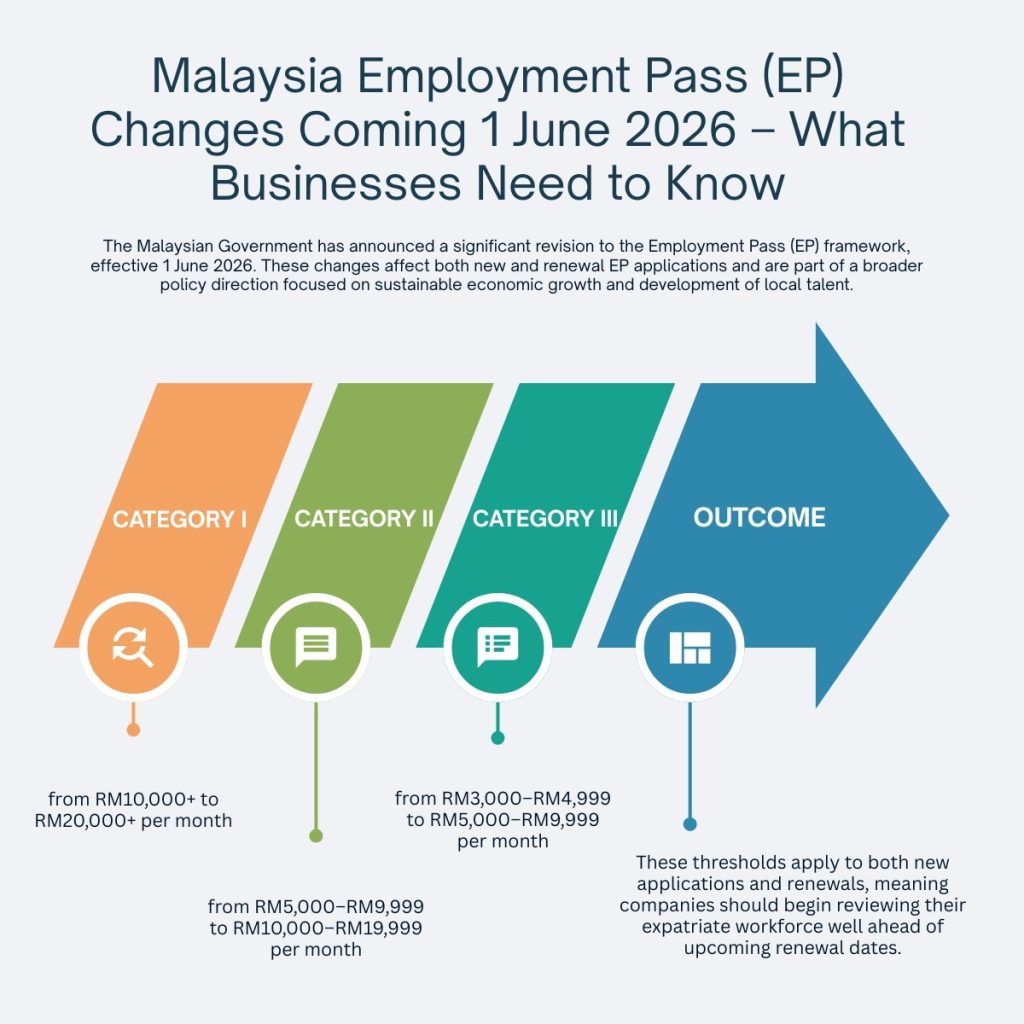
The Ministry of Home Affairs (MOHA), via Malaysia Digital Economy Corporation (MDEC) and the Expatriate Services Division (ESD), has confirmed that all new and renewal Employment Pass applications submitted on or after 1 June 2026 must meet revised salary thresholds.
Revised Minimum Salary Thresholds (from 1 June 2026)
EP Category
Current Minimum Salary
Revised Minimum Salary
Category I RM10,000+ RM20,000+
Category II RM5,000–RM9,999
RM10,000– RM19,999
Category III RM3,000–RM4,999 RM5,000–RM9,999
(Manufacturing related services may have RM7,000– RM9,999 for Cat III)
These revised thresholds are a significant step up from existing minimums and apply to both new applications and renewals. Employers should treat this as a core compliance requirement for any expatriate hire or renewal process occurring mid-2026 and beyond.
New Employment Duration Expectations
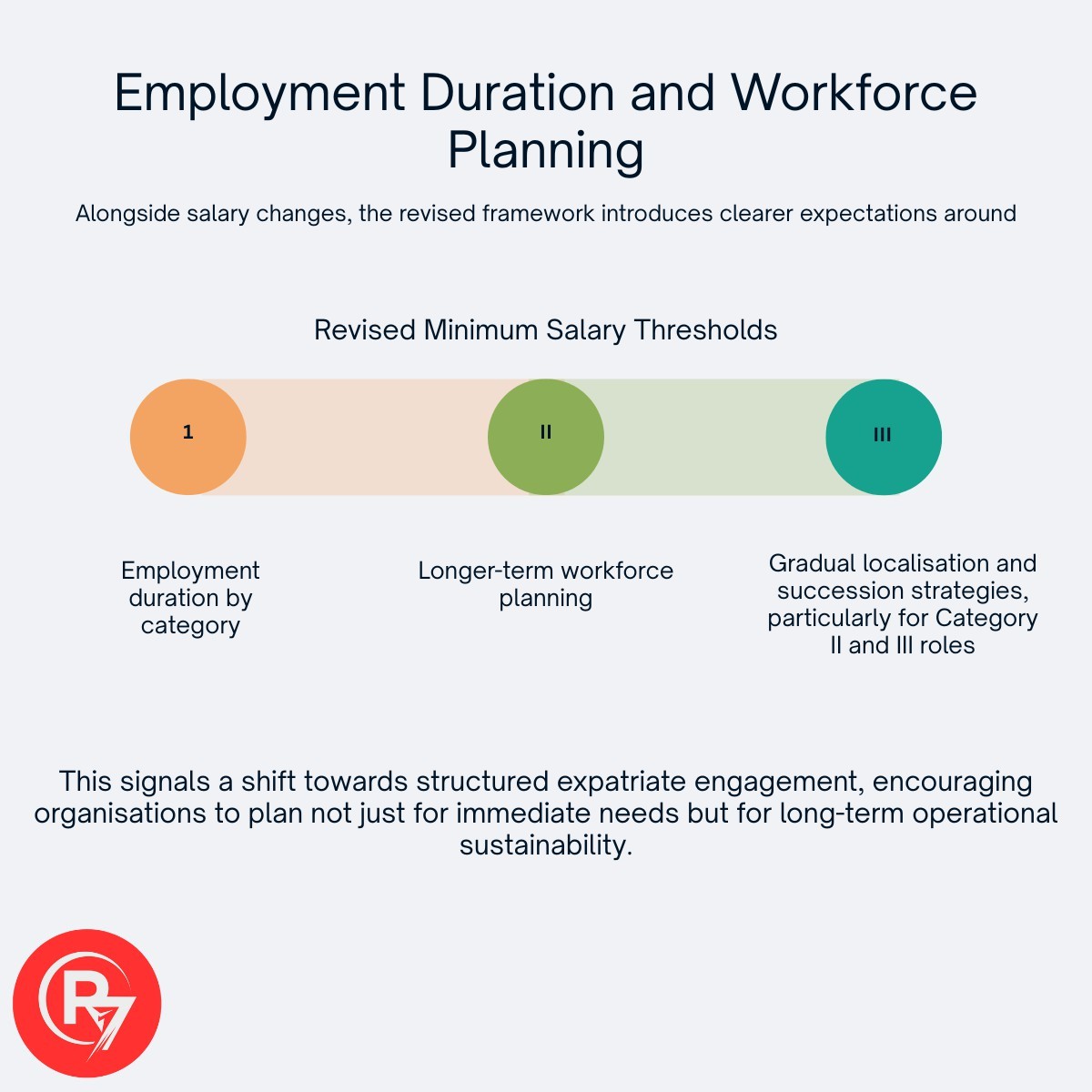
Along with higher salary thresholds, the revised policy introduces defined employment durations for EP holders:
- Category I: Up to 10 years
- Category II: Up to 10 years (with succession plan)
- Category III: Up to 5 years (with succession plan)
This structured approach encourages companies to plan longer-term workforce strategies and incorporate local talent succession planning where applicable.
Why These Changes Are Happening
According to official statements, the policy aims to:
- Reduce reliance on foreign labour where local talent can be developed
- Attract and retain higher-value, knowledge-driven expatriate roles
- Support sustainable economic growth while aligning with the 13th Malaysia Plan goals
- Encourage clearer career progression and skills transfer to local employees
Importantly, the policy revision is not intended to restrict foreign professionals outright but to ensure that expatriate employment adds demonstrable value and complements local
workforce development.
Key Actions for Employers
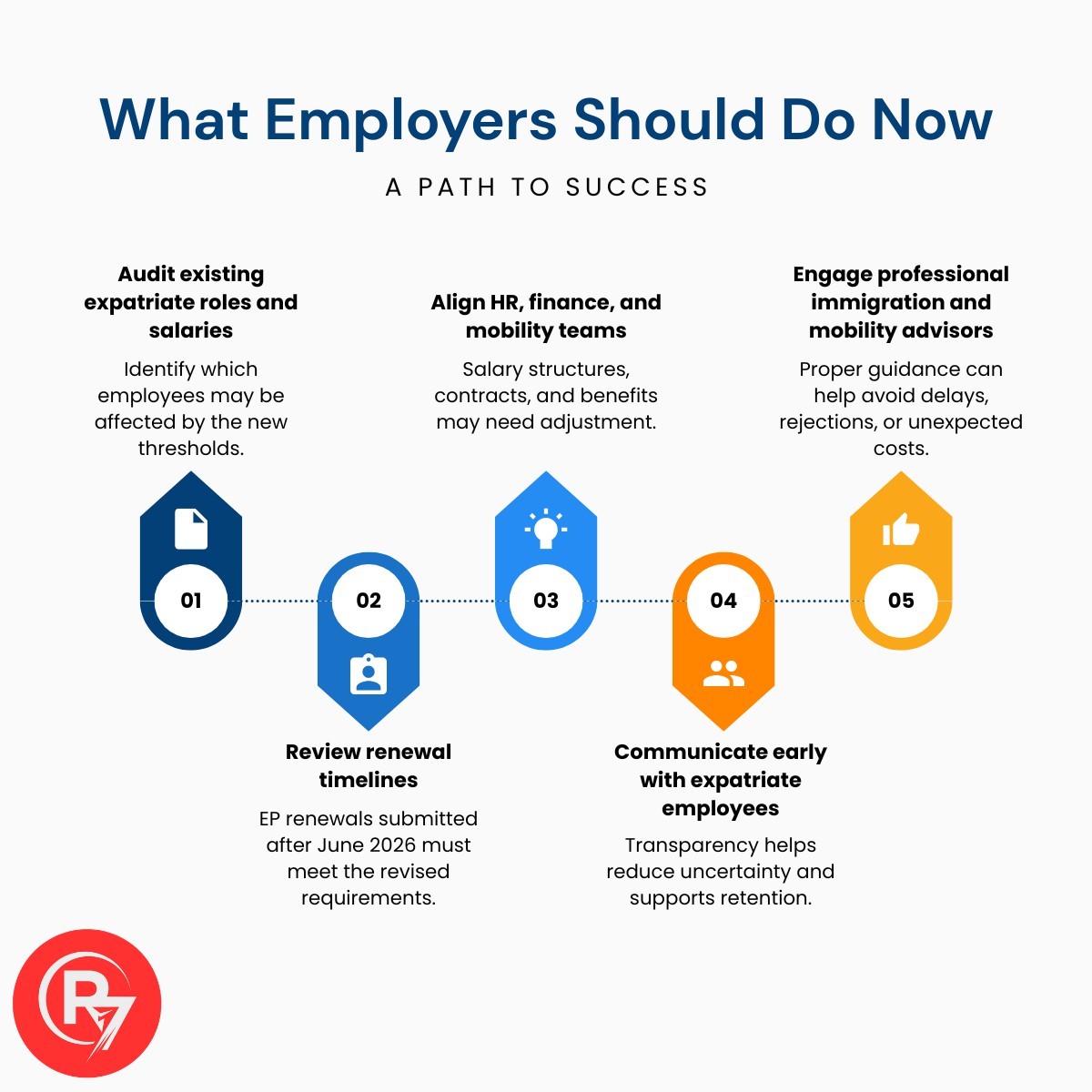
These changes will affect global mobility programs, assignment planning, renewals, and expatriate compensation structures. Employers with international assignees in Malaysia should consider the following actions:
1. Review Expatriate Salary Structures
Compare existing expatriate salaries against the new thresholds to determine which roles need compensation realignment before renewals are submitted.
2. Map Renewal Timelines
Identify which EPs are due for renewal post-June 2026 and begin planning early to avoid last- minute compliance issues and potential downtime.
3. Adjust Workforce & Succession Plans
Develop succession strategies for mid-tier (Category II/III) roles that may require evidence of local workforce integration or long-term capacity building.
4. Reassess Budgets
Factor in revised salary levels in HR budgets, especially for roles currently positioned near the old minimums.
5. Engage with Immigration Partners
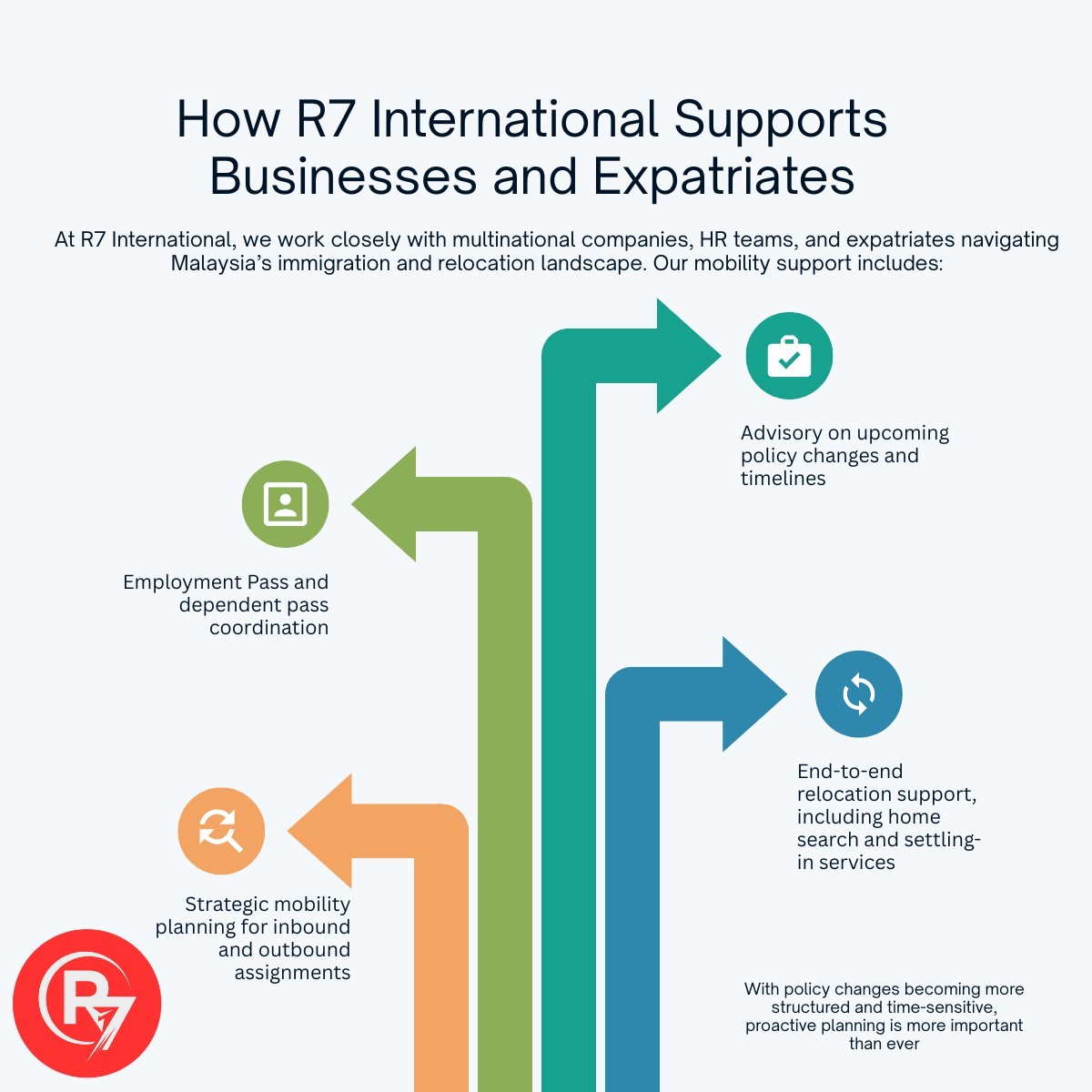
Leverage professional immigration and mobility advisors to navigate documentation requirements, timing, and potential transition mechanisms.
Broader Considerations for Mobility Teams
These reforms underline a broader policy trend in the region: governments are increasingly aligning expatriate employment criteria with local talent development goals and economic competitiveness. Similar moves are seen in neighbouring markets, where salary floors, work duration limits, and evidence of succession planning are becoming more pronounced.
For mobility professionals, this reinforces the importance of:
- Early strategic planning
- Cross-functional coordination between HR, mobility, and finance
- A keen understanding of local immigration dynamics in the context of global talent strategy
Final Thoughts
Malaysia’s EP salary and duration changes — effective 1 June 2026 — represent a major policy shift with clear implications for global mobility and talent deployment. Organizations employing expatriates in Malaysia should act now to review compensation, renewals, and workforce planning to ensure seamless compliance and continued operational stability.
If you haven’t already, start reviewing your expatriate workforce today to align with the revised requirements and stay ahead of implementation timelines.
Contributed by R7 International