
How Ongoing Middle East Conflict Is Affecting International Moving Costs and Transit Times in 2026
As global mobility continues to recover and international assignments increase across Asia, Europe and the Middle East, many relocating families and businesses are facing an unexpected challenge: rising freight costs and longer shipping timelines caused by ongoing geopolitical tensions in the Middle East.
While most people associate international relocation costs with packing, transportation and customs clearance, global events can have a significant impact on how quickly and efficiently household goods move around the world.
In 2026, continued instability in key shipping regions has created challenges for shipping lines, freight providers and relocation companies. Whether you are relocating an employee to Southeast Asia, moving your family overseas, or planning a corporate assignment, understanding these developments can help you make more informed decisions and avoid costly surprises.
Why the Middle East Matters to Global Shipping
The Middle East sits at the centre of several of the world’s most important trade routes.
Every year, millions of containers move between Asia, Europe, Africa and North America through critical shipping corridors such as:
- The Suez Canal
- The Red Sea
- The Bab el-Mandeb Strait
- The Strait of Hormuz
These routes are essential for global commerce because they provide the fastest connection between manufacturing centres in Asia and consumer markets in Europe and beyond.
When disruptions occur in these regions, shipping lines often have no choice but to reroute vessels, adjust schedules or implement additional security measures. These changes increase operational costs and create knock-on effects across global supply chains.
For the international moving industry, this can directly impact transit times, freight rates and shipment planning.
The Continued Impact of Red Sea Disruptions
Throughout 2025 and into 2026, shipping companies have continued to monitor security concerns in and around the Red Sea.
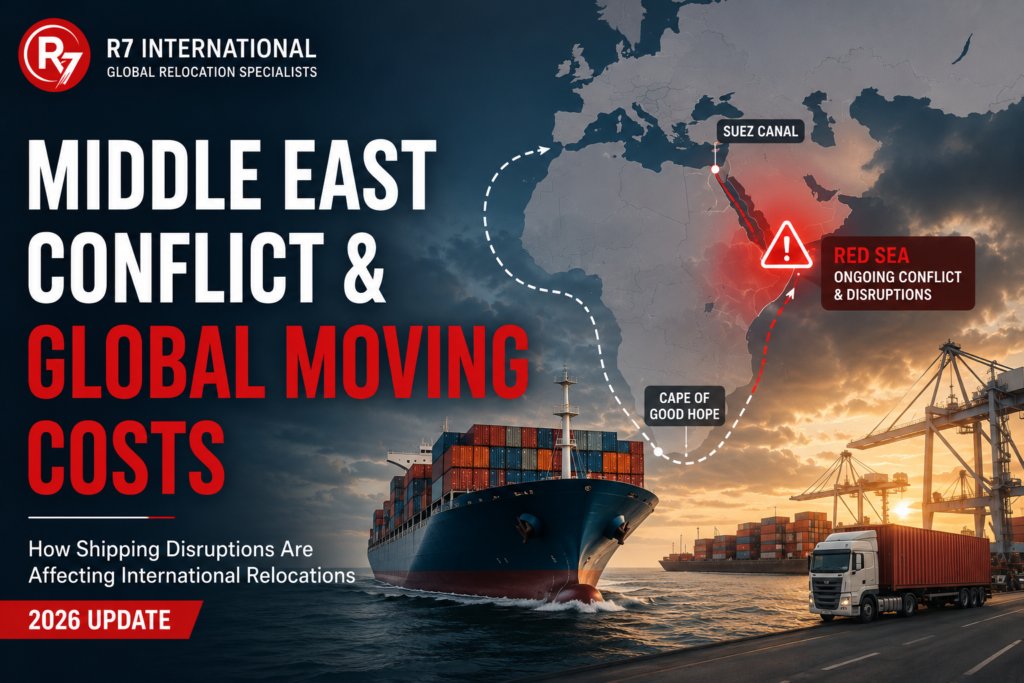
Many carriers have adjusted routes or maintained contingency plans to reduce risk. In some cases, vessels are travelling around the Cape of Good Hope at the southern tip of Africa instead of using traditional routes through the Suez Canal.
While this approach improves security, it also adds significant distance to many voyages.
For international moving customers, this can result in:
- Longer sailing times
- Increased fuel costs
- Reduced vessel availability
- More frequent schedule changes
- Higher freight charges
Although global supply chains have adapted remarkably well, these additional costs ultimately affect the price of moving household goods internationally.
Why International Moving Costs Have Increased
One of the most noticeable effects of ongoing geopolitical uncertainty is increased freight pricing.
When shipping lines face longer routes, higher fuel consumption and increased insurance costs, those expenses are often reflected in freight rates.
For international relocations, freight is typically one of the largest components of the overall moving budget.
A typical relocation quotation may include:
- Origin services
- Export packing
- Freight transportation
- Customs clearance
- Destination services
- Delivery and unpacking
When freight costs rise, the total cost of an international move can increase significantly, particularly for larger household shipments moving between continents.
This is especially relevant for relocations between:
- Europe and Southeast Asia
- The Middle East and Asia
- Asia and North America
- Europe and Australia
Longer Transit Times Are Becoming More Common
Cost is only one part of the equation.
Transit times have also become less predictable.
Before recent disruptions, many shipping routes followed highly optimised schedules with reliable transit windows. Today, routing adjustments and operational challenges can add additional days or even weeks to certain shipments.
This means that families and businesses planning international moves should allow extra flexibility when scheduling:
- Move dates
- Temporary accommodation
- School enrolment
- Employee onboarding
- Furniture delivery
- Housing arrangements
The most successful relocations are those that build contingency time into the overall relocation plan.
What This Means for Corporate Relocation Programs
For HR teams and global mobility managers, freight volatility presents several challenges.
Corporate relocation budgets often focus on major expenses such as:
- Airfares
- Immigration costs
- Temporary accommodation
- Household goods shipping
However, unexpected freight increases can place additional pressure on relocation budgets if they are not anticipated.
Organizations relocating employees internationally should consider:
Building Flexibility Into Budgets
Freight rates can fluctuate depending on market conditions, fuel costs and global events.
Planning Earlier
Early planning provides greater flexibility and reduces the risk of premium shipping charges.
Communicating Expectations
Employees should understand that international shipping timelines may vary depending on market conditions and destination requirements.
Working With Experienced Relocation Partners
A knowledgeable relocation provider can help identify potential risks early and recommend alternative solutions when required.
The Impact on ASEAN Relocations
At R7 International, many of our relocations involve movements into and out of Southeast Asia.
Countries such as:
- Malaysia
- Singapore
- Thailand
- Vietnam
- Indonesia
continue to attract expatriates, investors and multinational businesses due to their economic growth, quality of life and strategic location.
While ASEAN remains one of the most dynamic regions in the world, international shipments entering and leaving the region are still influenced by global freight markets.
For example, a shipment moving from Europe to Malaysia or Singapore may still be affected by changes in vessel routing, freight availability or port congestion elsewhere in the world.
This is why accurate planning and proactive communication remain critical throughout the relocation process.
Practical Tips for Families Planning an International Move
If you are planning an international relocation in 2026, there are several steps you can take to minimize disruption.
Start Earlier Than You Think You Need To
The earlier you begin planning, the more options you will have available.
Book Freight Early
Securing shipping space early can help avoid last-minute challenges and unexpected costs.
Keep Essential Items Separate
Important documents, medication, electronics and immediate necessities should travel with you rather than being packed into your household shipment.
Remain Flexible
Unexpected delays can occur even in well-managed relocations. Building flexibility into your plans reduces stress.
Choose an Experienced Relocation Partner
Professional guidance can make a significant difference when navigating changing freight conditions and customs requirements.
Looking Ahead
While global shipping markets have shown signs of stabilization compared to the peak disruptions experienced in previous years, uncertainty remains a factor in 2026.
Industry experts continue to monitor developments across key shipping corridors, and freight markets are expected to remain sensitive to geopolitical events.
For individuals, families and businesses relocating internationally, the best approach is to focus on preparation, flexibility and expert guidance.
Conclusion
Ongoing Middle East conflict continues to influence global shipping routes, freight costs and international moving timelines in 2026.
Although the international relocation industry has adapted to these challenges, customers should expect a greater emphasis on planning, flexibility and realistic scheduling.
Whether you are relocating an employee, moving your family overseas or managing a global mobility program, understanding how global events impact logistics can help you avoid delays and make better relocation decisions.
At R7 International, we support individuals, families and corporate clients with international relocation services across Malaysia, Singapore, Thailand, Vietnam, Indonesia and beyond.
For advice on planning your next international move, contact our team at info@r7intl.com.